

contact@govacons.com.vn

0938 727 179



The order is signed, the delivery date is in the contract, and the factory still exists mostly on drawings. The instinctive question is: which month should we start construction to get the machines running on time? It sounds practical, but it combines several different decisions into one calendar date. A project may need legal and design preparation, surveys, coordination and procurement well in advance, while the site is not yet ready—or legally eligible—for construction activity. Conversely, once the land, design, resources and scope are ready, waiting for a generic “best month” can consume schedule contingency without solving a real constraint.
A more useful starting point is a measurable operating condition: which line must be installed, what utilities must work, what must the first product meet, and who confirms it? Work backwards from that condition through design, legal requirements, procurement, construction, equipment installation, integration and commissioning. The construction start date is not the delivery date minus a standard factory-building duration. It is the outcome of project-specific dependencies, buffers and uncertainties.
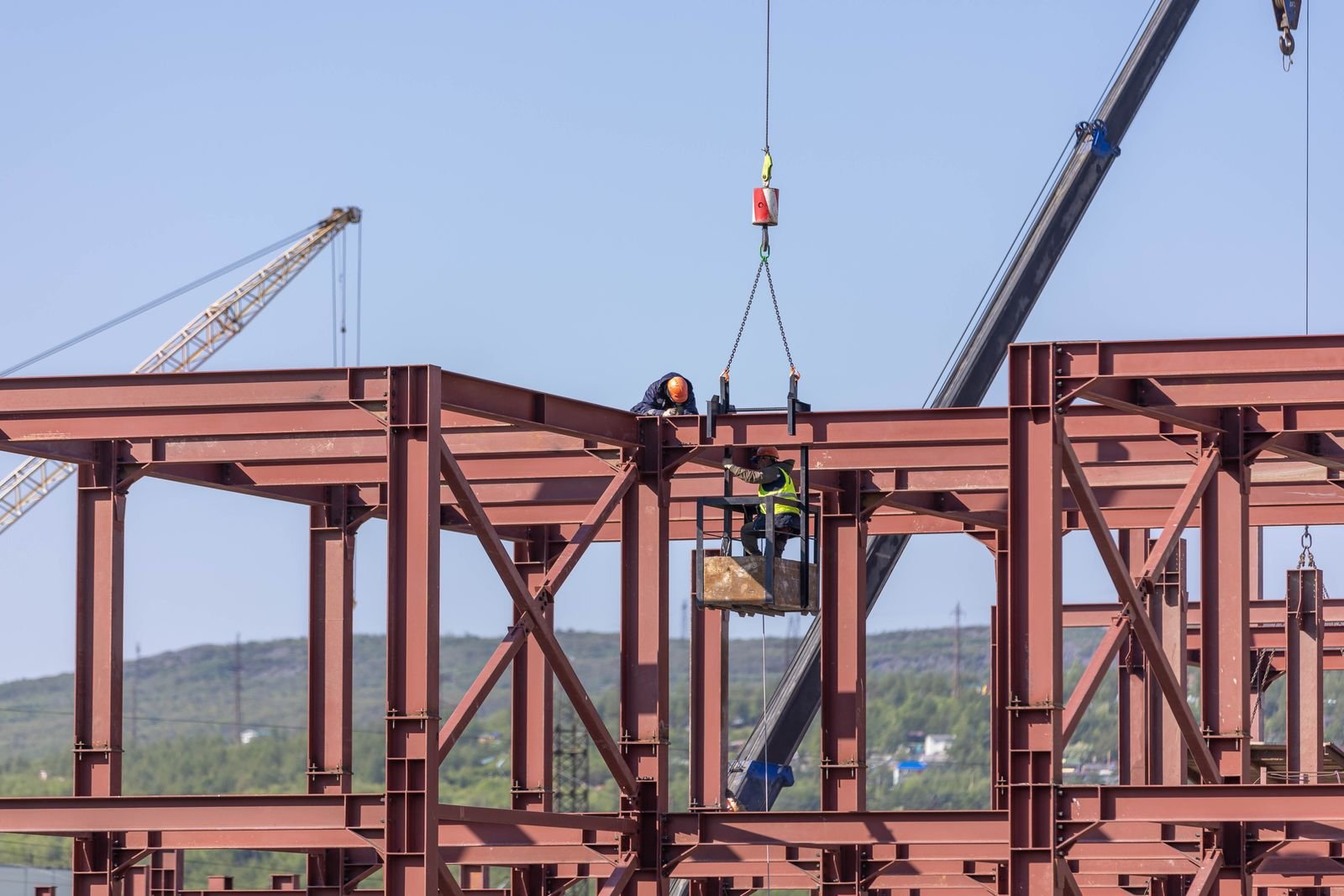
A production commitment is useful because it gives the business a real deadline. But a delivery date does not tell you when the plant is production-ready. Define “machines running” through observable evidence rather than a convenient phrase: perhaps the first batch passes an agreed internal quality test, a line reaches specified operating parameters, or a trial run completes with essential utilities stable. The right criterion depends on the product and contract. Completion of the building is not the same as readiness to ship.
Between construction completion and production there may be equipment installation, electrical and control integration, compressed air, process water, drainage, environmental systems, safety checks, inspections or commissioning. Requirements vary by project. Ask the equipment supplier, designer, contractor and operations team to identify prerequisites for a first production run. If the contractual milestone is delivery of conforming goods, the first trial run must precede it; if it is merely the start of installation, the backward plan is different.
Keep three dates distinct. “Preparation starts” may mean surveys, design, legal review, utility coordination and quotations. “Construction mobilization” means bringing people, equipment and construction activity to the site for a defined scope, subject to applicable conditions. “Ready to run” means operations meet agreed criteria. These milestones relate to one another, but they are not interchangeable. Early preparation can prevent decisions being compressed into the last minute; it does not authorize construction work before the requirements for that work are met.
Do not build the schedule by simply adding durations supplied separately by different parties. Equipment manufacture, construction, installation and approvals can be added or overlapped only after their dependencies are understood. If the supplier releases drawings only after configuration is approved, and the machine foundation depends on confirmed loads and positions, procurement and foundation design are linked. If access to the land or a utility connection is unconfirmed, a projected building-completion date does not remove that constraint. An integrated dependency map shows what controls the final date, what can safely run in parallel and what remains an unverified assumption.
Many activities can and often should begin before construction mobilization: confirm production needs and capacity; survey the site; check boundaries and land-use rights; collect appropriate topographic and geotechnical information; review utilities; develop the process layout; prepare design requirements; compare utility demand; obtain preliminary quotations; ask suppliers about lead times; identify imported or long-lead equipment; plan funding; and assign decision-makers. These are information-gathering and project-organization activities. They are not permits and do not replace legal conditions for construction.
The team can also develop an integrated schedule, agree drawing-approval responsibilities, define acceptance criteria and describe what “production-ready” means. Doing so helps prevent a building design from being based on assumptions incompatible with the intended production line. For equipment with significant manufacturing or transport lead times, early work on ordering conditions, frozen specifications, payment terms and storage needs can be valuable. But an order may create financial exposure and make later changes difficult. Confirm compatibility and authority before committing; “buy early” is not a universal rule.
Keep the boundary between documentation preparation and site construction clear. Different projects and work packages may be subject to different planning, land, design, appraisal, permit or exemption conditions, as well as sector-specific obligations. This article does not interpret a particular project’s approvals. The Construction Law No. 135/2025/QH15, Decree 217/2026/ND-CP and Resolution 66.18/2026/NQ-CP took effect on 1 July 2026 according to the official sources cited below; application depends on project scope, type and relevant implementing rules. Do not infer that every procedure has disappeared or that every project follows the same process.
A statutory processing period, where one applies to a particular valid application, is not the total time a business needs to assemble complete information. Before filing, the team may need to settle a design, complete drawings, verify land and utility information, consult stakeholders or revise inconsistent material. Do not take a quoted administrative processing period as the entire legal-preparation duration. Confirm the current instrument, authority and procedure for the actual project, and allow for document preparation and requests for additional information. No approval or shortened process is promised here.
Before mobilization, check the readiness of the specific package: scope and drawings are approved under the project process; the area is accessible and handed over; boundaries, levels, buried services and connection points have been verified as needed; construction methods, personnel, equipment, materials, safety and site organization are prepared; and legal preconditions for that particular work have been checked. This is not a universal legal checklist. It is a coordination prompt to keep commercial urgency from being mistaken for authorization to build.
Where site control is clear, boundaries are handed over, suitable ground data is available, access works, and temporary drainage and utility connections have been addressed, design and construction planning can proceed from a relatively stable baseline. “Ready” still needs verification, not just a line in meeting minutes. A handed-over plot may contain obstructions, unresolved levels, utility corridors, road load limits or industrial-park operating restrictions. A power connection near the boundary does not prove that capacity, availability date and connection responsibilities are settled.
In that situation, the owner may be able to lock packages without losing needed flexibility: coordinate design, settle the machine-foundation interface, reserve supplier capacity once specifications are confirmed, plan work zones and set a provisional mobilization window. If the rainy season is approaching, that does not automatically mean the whole project should start immediately. It may make sense to prioritize a ready earthworks, drainage or access package while holding other work until drawings, materials, procedures or equipment interfaces are resolved. Package splitting only helps when responsibility boundaries, temporary handovers and interfaces are managed.
If land, utilities or site data are not ready, show the uncertainty instead of hiding it behind a desired start date. Unclear drainage levels or connection points may change the site, floor levels and service routes. Without suitable ground investigation, foundation design and pricing may rest on assumptions. If the site is not handed over, early mobilization can create idle costs, conflict with other users or rework. Calling an activity “site preparation” does not automatically make it legally permissible; determine the activity’s nature, location and applicable conditions first.
For unresolved constraints, use condition-based milestones: release the groundworks package after handover, ground information and drainage arrangements are confirmed; issue machine-foundation drawings after the supplier confirms loads and layout; place the equipment order after configuration approval. Each condition needs an owner, evidence for acceptance and a review date. If it is not met, update downstream dates and explain the effect on the production commitment. This is risk management, not avoidance of a decision.
A contractual delivery date may be difficult to move; a demand forecast or framework agreement may allow split shipments, a revised product sequence or a different delivery window. Read the actual terms before turning the date into a production milestone: is it delivery at the factory or receipt by the customer, is sample approval required, who owns transport and customs time, are deliveries phased, and what happens if the date slips? Do not assume a customer will grant an extension, but do not build an entire factory around an unconfirmed sales forecast either.
For a firm deadline with material consequences for delay, prepare scenarios. The base case reflects current evidence; a prudent case tests reasonable adverse assumptions about procedures, delivery or weather; a recovery case includes only measures that are feasible, safe and lawful, such as splitting equipment shipments, running independent packages in parallel, adding shifts where appropriate, outsourcing a process or negotiating partial delivery. Test every measure for capacity, quality, safety, cost and customer acceptance. “Recovering the schedule” is not a reason to skip checks or mobilize without required conditions.
If the deadline is flexible, turn that flexibility into deliberate value: agree a delivery window, prioritize a sample or product that can run first, or phase ramp-up to match plant capability. The available time need not become a reason to delay everything; it can support design coordination, procurement, line testing and operator training without creating a premature site. Record what changes the delivery date and who may approve it. An internal target described externally as a firm commitment creates the same risk as a genuinely fixed contract date.
Production planning also depends on items outside the building contract: are inputs available, can the equipment supplier provide installation specialists, are control software and product data ready, must the customer approve a sample, and have operators been trained? If the first product needs adjustment before it passes, energizing a machine is not the same as meeting the delivery obligation. Resolving these conditions early is usually more useful than debating a generic construction month.

A new building on a separate site may allow clearer work zones and early planning for access, laydown and temporary drainage. Yet off-site utility connections, power and water availability, access rights, ground conditions and handover can still control the critical path. The building must also coordinate with the intended equipment and process, not just its architectural form. An empty plot is not necessarily a ready site.
Expansion inside an operating plant presents a different interface challenge. Construction may sit beside production lines, warehouses, forklift routes or live utilities. Define shutdown windows, delivery routes, isolation zones, dust/vibration/noise controls, utility cutovers, work-permit procedures and who restores operations. A small area of work can have a large impact if it affects shared services or requires an existing line to stop. Coordinate the construction schedule with plant management, not only the project team and contractor.
Map interfaces before choosing a mobilization date: what can proceed while production continues; what requires a shutdown; which routes must remain open; what limits apply to dust, vibration, hot work or noise; and who authorizes isolation and re-energization? Answers depend on industry, equipment, safety procedures and site rules. If there is only one confirmed shutdown window, prepare critical connections well beforehand. Do not assume the outage can be extended if something goes wrong.
Phasing work by area can reduce conflict with live operations, but it does not automatically shorten the total schedule. It may add temporary barriers, detours, repeated mobilization and interface checks. Ask whether a separated phase can deliver useful independent capacity before the rest is complete, and whether that output satisfies the order. If it cannot operate independently, “partial handover” may be an administrative milestone rather than production value.
There is no single best month to start a factory in Vietnam. A project may include surveys, excavation, ground treatment, foundations, steel or precast frames, walls, roofing, finishes, internal roads, services and commissioning. Their sensitivity to rain, heat, wind, humidity and ground conditions differs. A suitable window for one package may not suit the whole project. Instead of asking “which season is best?”, ask which critical-path work will occur when, and what actual conditions would prevent it or require a different method.
QCVN 02:2022/BXD, Vietnam’s regulation on natural-condition data for construction, provides climate data by station and region. It is an official technical reference, not a forecast for a specific plot and not a declaration of a universally best construction month. Planners should select an appropriate nearby station, use the relevant indicators for the work, and compare them with site topography, drainage, flood exposure, ground conditions and local observations or forecasts. Climate averages support scenarios; they do not replace short-range forecasts or the contractor’s technical assessment.
In southern Vietnam, the regulation describes the rainy season as normally around May through October; “normally” matters. Those dates cannot be applied mechanically to every province, year or site. Other regions have different rainfall patterns, and elevation, terrain, drainage, water levels, access and site condition can vary even locally. Do not treat the nominal start or end of a rainy season as a guarantee of dry weather or workable ground. Check station data and the actual location.
Excavation and earthworks are often sensitive to surface water, mud, equipment access, slope stability and temporary drainage. Rain can affect moisture, ground condition and movement; the answer is not simply to shift every earthwork activity into a fixed season. Some sites may support phased work, protection or drainage measures; others, especially low-lying or challenging ground, need further assessment and may not be suitable for mobilization before water controls are established. A competent professional must determine specific measures from investigation, design and method statements.
Concrete work requires control of mix, delivery, placement, compaction, curing and environmental conditions under the design, applicable standards and approved method. Sudden rain, heat or wind can affect execution and quality, but it is not accurate to claim concrete can never be placed in a particular season. The contractor should define stop thresholds, protection measures, cover capacity, supply and responses to changing conditions. If a pour controls downstream work, include a decision point and reasonable contingency rather than just a target date.
Internal roads and yards need to be considered against materials, pavement structure, drainage, vehicle loading and intended use. Wet conditions can complicate subgrade, delivery, compaction or finishing; completing a final surface too early can also expose it to damage from heavy construction traffic. A project may distinguish temporary construction access from permanent operational roads, but that choice should be designed and managed rather than assumed to be cheap or easy. An unusable route can delay equipment delivery even when the building is nearly complete.
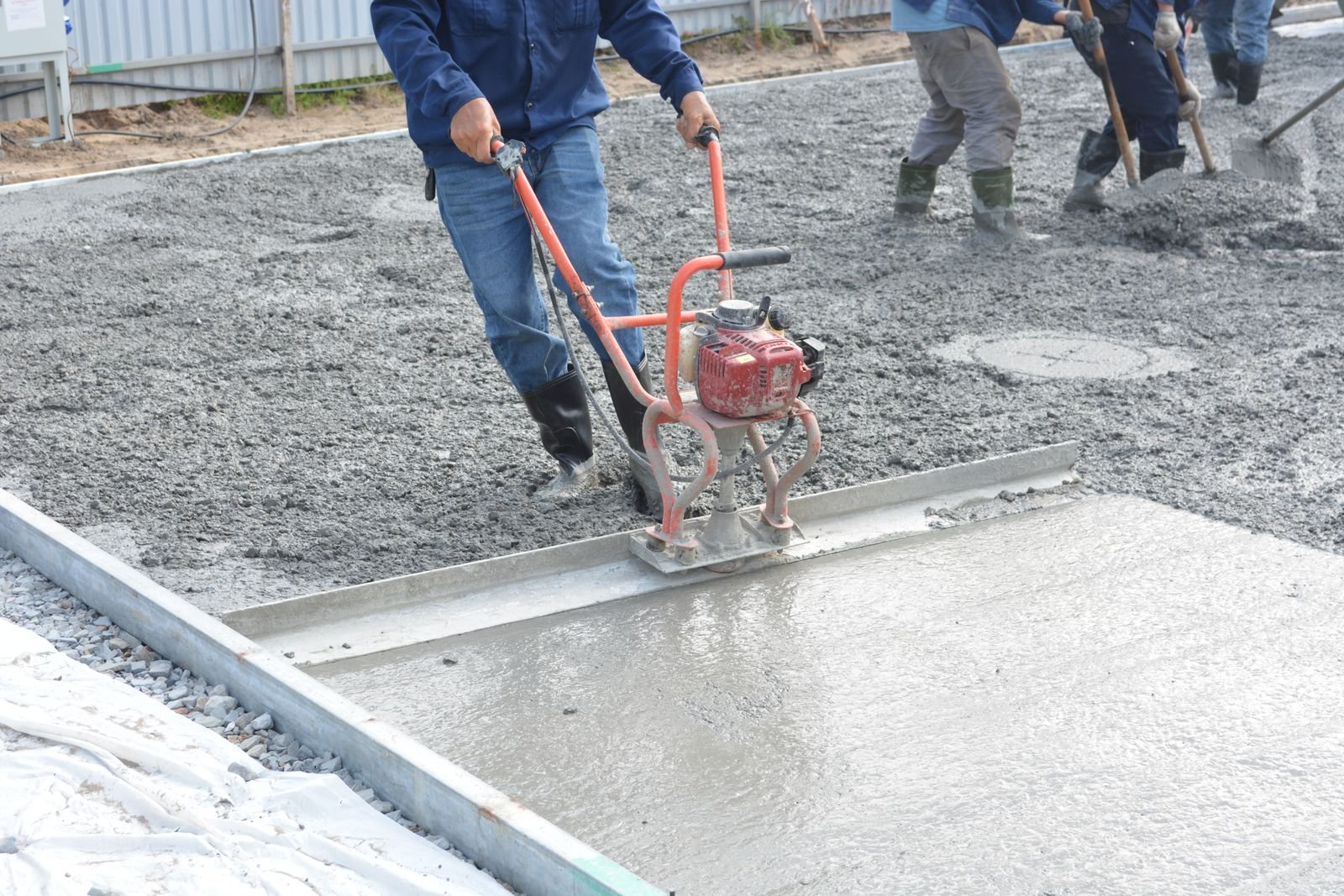
Steel frames and precast components may allow some production off site, but they are not weather-proof or site-independent. Consider fabrication, transport, laydown, lifting access, wind, ground bearing, crane zones, connections, tolerances and temporary stability. “Fast to erect” does not guarantee a shorter overall schedule: components still need design, approval, fabrication, timely delivery and safe access. Coordinate the building design, fabricator, lifting equipment and follow-on work.
Compare prefabricated or steel packages with wet trades on scope, design and supply capability, not technology labels. Foundations, slabs, walls, waterproofing, coatings, service trenches and external works may still be sensitive to conditions. Reducing activity on site can transfer dependencies to factory fabrication, transport, storage or lifting. If component delivery is not confirmed, early foundations can create idle time; if laydown space is inadequate, early delivery can cause damage and obstruct site logistics.
Build a package-level schedule with explicit start conditions and hold points. Earthworks may require access and temporary drainage; concrete needs design, supply, quality controls and a workable window; frame erection needs components, lifting equipment, access and acceptable wind; final roads may depend on heavy deliveries being complete. This helps use favorable conditions for the right work without turning seasonal planning into a blanket instruction to “start before the rains.”
Materials are not just a quotation price. Specification approval, manufacture, import, transport, inspection, storage and delivery to the right part of the site may all affect first production. Separate common materials that can be bought near construction from customized or potentially long-lead items: principal equipment, switchgear, transformers, controls, fabricated components, finishes or compatible accessories. The actual list depends on the design and market. Do not assume every item is scarce or every supplier lead time is fixed.
The National Statistics Office’s Q3 2026 construction-business survey reported that, among surveyed firms, 65% cited high material prices, 24.1% cited material-supply difficulty and 26.1% cited unfavorable weather. Some 56.7% said direct material costs rose from Q2, while 53.2% expected an increase in Q4 versus Q3. These are respondent sentiments, not a project price index, a guaranteed forecast or evidence that a particular item will be unavailable. They are a reason to test procurement assumptions—not proof that everything should be bought early.
In the same survey, 18.7% cited administrative procedures as a business difficulty. That reflects respondents’ views; it does not measure processing time for the project in question. Of the 5,974 construction firms sampled, 5,826 responded: 30.9% said conditions in Q3 improved, 41.4% said they were unchanged and 27.7% said they worsened from Q2. Q4 expectations were broadly stable, but that does not guarantee a particular supplier’s capacity, price or delivery date. The NSO also reported 12.22% year-on-year growth in construction value added in the first nine months; this is broad economic context, not a basis for inferring an individual project’s start window.
For each critical item, record the required on-site date and work backward to configuration freeze, drawing approval, order, manufacture, transport, any customs process, inspection and contingency for discrepancies. Ask the supplier what changes the lead time, when the clock starts, which specifications must be frozen and whether a compatible alternative exists. Do not put an unqualified “lead time about…” into the schedule without its source, confirmation date and assumptions. Nor should an arbitrary buffer be treated as certainty: connect contingency to specific risks and update it when evidence changes.
Buying early may protect a manufacturing slot, but it can lock the business into an incomplete design, trigger storage costs, start warranty periods at delivery, expose equipment to damage or obsolescence, or limit configuration changes. Buying late may leave a completed site waiting for equipment. The right choice is not always “order now” or “wait until foundations are done.” It depends on specification certainty, equipment criticality, payment terms and the supplier’s ability to reserve capacity. Assign someone with authority to accept the commercial risk.

A useful plan begins by defining production readiness. Specify the first product or batch, quality criteria, required output or trial mode, essential utilities, equipment state and sign-off owner. Then identify prerequisites: installation and connection; completion of the relevant area; electricity, water, air or other services required by the line; interlock tests; training; raw materials; quality-control procedures; and applicable compliance requirements. Not every prerequisite belongs to the construction contract, but if it is missing, a “building complete” milestone does not get the business closer to a conforming shipment.
Map the sequence backward from delivery, but do not assume every task is sequential. Some design coordination, procurement or training can happen during construction if information is stable and interfaces are controlled. Other tasks have clear predecessors: complete the machine base before installation; provide power and verify systems before commissioning; confirm product quality before shipment. Record a start condition, owner and evidence of completion for each milestone. Where workstreams meet, name who resolves priorities and changes.
Distinguish a scheduled duration from confidence in the date. A precise calendar date supported by unconfirmed assumptions only looks certain. For each key assumption—site handover, utility availability, equipment delivery, customer decision or weather—record whether it is confirmed, pending or disputed. Update the plan with evidence rather than preserving it because it has already been presented to leadership. For a high-consequence business milestone, agree in advance what triggers contingency action and who can change scope or delivery commitments.
It can be more honest to express mobilization as a window or a condition-based milestone than as an overly early fixed date: “release the earthworks package after site handover, temporary drainage approval and required work-specific documentation”; or “place the equipment order after interface specifications are signed, while reserving the production slot under agreed terms.” This makes remaining dependencies visible. It also helps executives distinguish an internal coordination target from an external commitment.
The following scenario is anonymized and illustrative; it is not a Gova project or a real client record. A hypothetical packaging manufacturer receives an order with an agreed first-batch delivery date. It plans an expansion on land beside an operating plant. The main equipment is configured to requirements; part of the structure is expected to use a steel frame; foundations, machine bases and delivery routes must be coordinated with ongoing production. The delivery date has not been confirmed as movable. Initially, the project team proposes “start immediately” to demonstrate urgency.
Interface review finds that the site is not fully handed over, drainage and some utility connections need confirmation, the equipment supplier has not finalized machine-base loads and positions, and the delivery route must remain available to the live plant. Some ordinary materials can be procured with the construction package, while the main equipment requires configuration freeze and a manufacturer’s supply slot. None of this proves the project will be late, and it does not justify inventing a number of weeks or a savings figure. It does show that a whole-site start date currently depends on several conditions without evidence.
The team defines the first production condition: equipment installed and connected, required utilities operating, a trial product meeting agreed internal criteria, and operations able to take over. It asks the customer whether first delivery can be phased or the current date is fixed; asks the machine supplier to confirm configuration, foundation interfaces, electrical requirements and installation support; and agrees with plant management when a live route or utility can be isolated. These discussions turn assumptions into decisions; they do not guarantee the schedule.
While those conditions are being resolved, the company continues surveying, coordinating design, checking applicable legal requirements, comparing supply schedules, preparing traffic arrangements and agreeing acceptance criteria. No construction work is treated as permissible merely because someone calls it “preparation.” Once a specific package’s scope and prerequisites are ready under the project’s requirements, the team can consider mobilizing that package; work still dependent on configuration, handover or a shutdown window remains conditional. If delivery cannot move, management sees the schedule risk and recovery options openly rather than having it concealed by an early start date.
The lesson is not a magic sequence or guaranteed outcome. It is a decision order: turn “on time for production” into testable criteria; identify constraints that can alter the critical path; begin valuable information work early; distinguish preparation from authorization to construct; and choose dates for individual packages only after relevant conditions are confirmed. If something later changes, the team knows which milestone is affected and who must decide. A later start supported by clear conditions can be more credible than an earlier date offered merely to reassure.
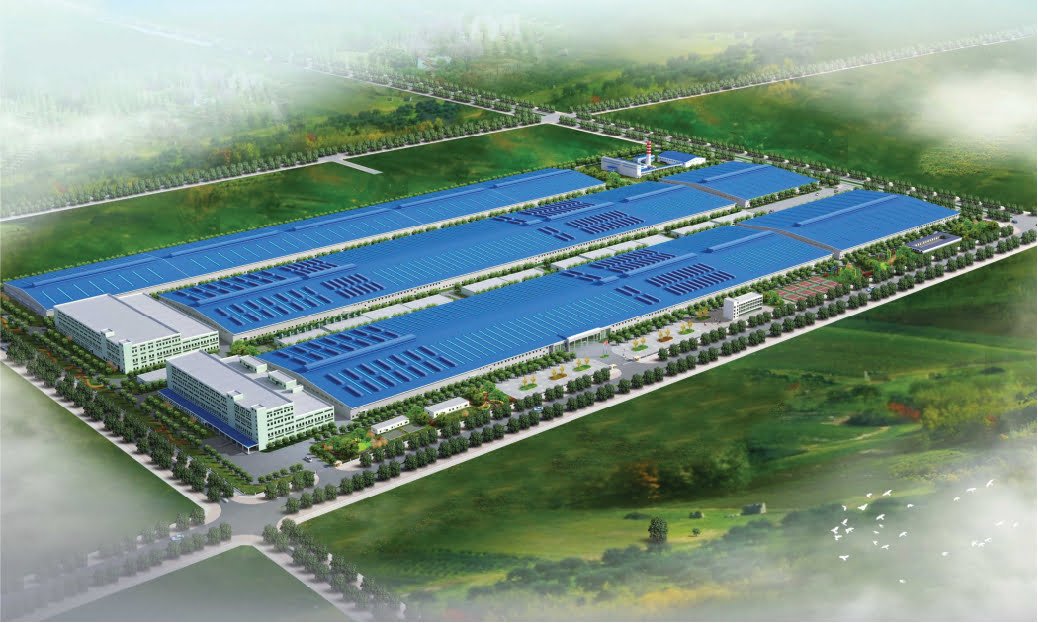
These questions do not replace legal documents, surveys, design or an integrated schedule. They help reveal where a calendar date rests on an assumption. If there is no answer yet, name an owner and a verification date instead of filling in a number merely to complete a schedule.
Once an order is secured, the work that should often begin early is preparation that creates reliable information: define production readiness, survey, coordinate design, clarify applicable legal conditions, check supply schedules and resolve interfaces with the operating plant or utilities. What should not follow is the assumption that commercial urgency means people and equipment can immediately enter the site. “Start preparation” and “start construction” are different actions with different conditions.
Choose mobilization according to each package’s readiness, local weather sensitivity, material delivery, order flexibility and impact on live operations. One project may prioritize an outdoor package ahead of a wet period; another may first need surveys, drainage or design resolution, or a different sequence for erection and wet trades. There is no best month without knowing the location, scope, ground, supply and critical-path activities.
Work backward from a defined first production run, while being honest about what is not confirmed. Climate averages are planning context, not a forecast; actual quantities, materials, legal facts, site conditions and supplier confirmations determine what is feasible for a given project. An owner may work with a design adviser, consultant and contractor such as Gova to review interfaces and construction planning. The decision still needs to rest on the actual documents, location and conditions of that project.
Note: This article is for general reference and planning orientation. Climate averages are not forecasts; decisions should reflect site-specific forecasts, actual quantities and materials, current legal requirements and project conditions. Verify applicable rules, authority and prerequisites against the filing date, location and scope of work.


