

contact@govacons.com.vn

0938 727 179



A professional B2B analysis of why construction material prices are rising, what to expect through end-2026, and how developers and contractors can protect budget, schedule and cash flow under persistent volatility.
Since early 2026, Vietnam’s construction market has seen simultaneous price movement across core material groups rather than isolated movements in one or two products. Cement producers have announced stepwise hikes, reinforcing steel has moved into a higher range, aggregates and fill materials have become more volatile by province, and transport costs have widened the gap between listed prices and actual delivered prices at project sites. As a result, historical unit-rate libraries are becoming obsolete faster, especially for projects now entering tendering or early execution.
The current cycle is not driven by a single shock. Pressure is coming from three layers at once: production inputs (energy, raw materials, exchange rates), logistics and distribution (freight, availability, delivery reliability), and demand recovery (public investment, industrial expansion, selective real-estate restart). When these layers move together, linear forecasting based on last year’s averages becomes unreliable.
International references, including World Bank outlooks, suggest a potential medium-term cooling in global commodities during 2026, particularly energy. Yet many commodity and logistics cost references remain sensitive to global and domestic conditions, and geopolitical tensions, trade friction, climate disruptions and shipping constraints can reverse sentiment quickly. For Vietnam, local demand dynamics and region-specific supply constraints keep domestic material risk elevated even if some global indicators improve.
For a B2B contractor profile such as Gova, the strategic issue is no longer simply “how much did prices increase,” but “how wide and how frequent is the uncertainty band month to month.” Companies that react slowly, refresh quotations quarterly and rely on rigid contracting are likely to lose margin. Companies with tighter market intelligence, phased procurement and robust waste control can convert volatility into an operational advantage.
A frequent blind spot is the gap between headline unit price and executable cost under real payment terms. In volatile periods, suppliers may keep list prices visible while tightening discounts, reducing credit windows or changing delivery obligations. Procurement teams that track only nominal price, without total-cost normalization by payment scenario, can underestimate effective inflation.
From a client relationship perspective, proactive communication is a commercial asset. Sharing cost scenarios and mitigation pathways early in pre-contract and mobilization phases aligns expectations and reduces conflict probability during execution. Trust built upfront often translates into faster approvals and smoother decision cycles.
A mature risk posture includes post-project learning loops. After each major package, teams should review forecast error sources, procurement timing effectiveness, supplier performance and waste outcomes. Codifying these lessons into templates and checklists compounds capability across future bids and projects.
Finally, leadership communication matters. In uncertain markets, organizations perform better when management provides clear assumptions, transparent trade-offs and consistent escalation paths. Decision consistency is often as important as decision speed.

At the production level, cement costs are highly exposed to coal and electricity. Even modest energy shifts can propagate through clinker burning, grinding, packaging and overall plant operation. Steel has a broader cost stack: iron ore or scrap, coking coal, electricity, consumables and foreign-exchange exposure for imported components. When multiple variables rise together, producers eventually pass costs through to market.
Logistics is the second amplifier. Construction materials are heavy and low value per unit weight, meaning transport is a major cost component. For cement, steel, sand and crushed stone, freight, fuel, tolls, route constraints and loading compliance can materially change delivered prices. Identical products can carry very different final costs depending on distance from quarry, mill, port or batching network.
Demand recovery is the third force. When public infrastructure disbursement accelerates, material-intensive works can absorb local aggregate supply quickly. Parallel demand from housing and industrial projects then raises competition for steel, concrete and finishing packages. The market outcome is not just higher prices, but stronger regional dispersion and shorter quotation validity windows.
Expectations form the fourth driver. If suppliers expect further cost inflation, they tighten quotation validity and add adjustment clauses. If contractors expect additional hikes, they bring purchases forward. This defensive behavior on both sides can intensify short-term tightness. Therefore, weekly decision cycles and rapid data refresh are now essential; monthly governance is often too slow for volatile packages.
Companies should also separate market risk from internal execution risk. In many cases, overruns come less from external price movement and more from late design change, quantity inaccuracy or poor site coordination that forces urgent purchases. Distinguishing these drivers allows leadership to deploy the right response: market-facing tools (price locks, supplier diversification, escalation terms) versus operational tools (design discipline, change control, procurement governance).
To improve forecast accuracy, firms should implement rolling 4–8 week material outlooks for critical categories, refreshed from executable quotations rather than static annual assumptions. Each cycle should capture price movement, consumption speed and supplier delivery reliability. This shift from static budgeting to rolling control improves response quality under fast-moving conditions.
Ultimately, the winners in a volatile market are not those who perfectly predict every price turn. Winners are those who build repeatable governance: faster data refresh, clearer contract mechanics, tighter design-procurement integration and disciplined site control. That governance consistency is what transforms volatility from a threat into managed exposure.
For Gova’s brand positioning, publishing structured market intelligence with implementation guidance can differentiate the company beyond pure execution capacity. Clients increasingly value partners who translate macro volatility into project-level action. Thought leadership anchored in practical controls strengthens both technical authority and business development outcomes.
Reinforcing steel remains the most sensitive category. It reacts to global raw-material cycles, exchange-rate movement and domestic construction momentum. If public-investment and industrial demand remain strong, steel can stay elevated even with temporary technical corrections. For structure-heavy contracts, small percentage changes in steel prices can significantly affect direct costs.
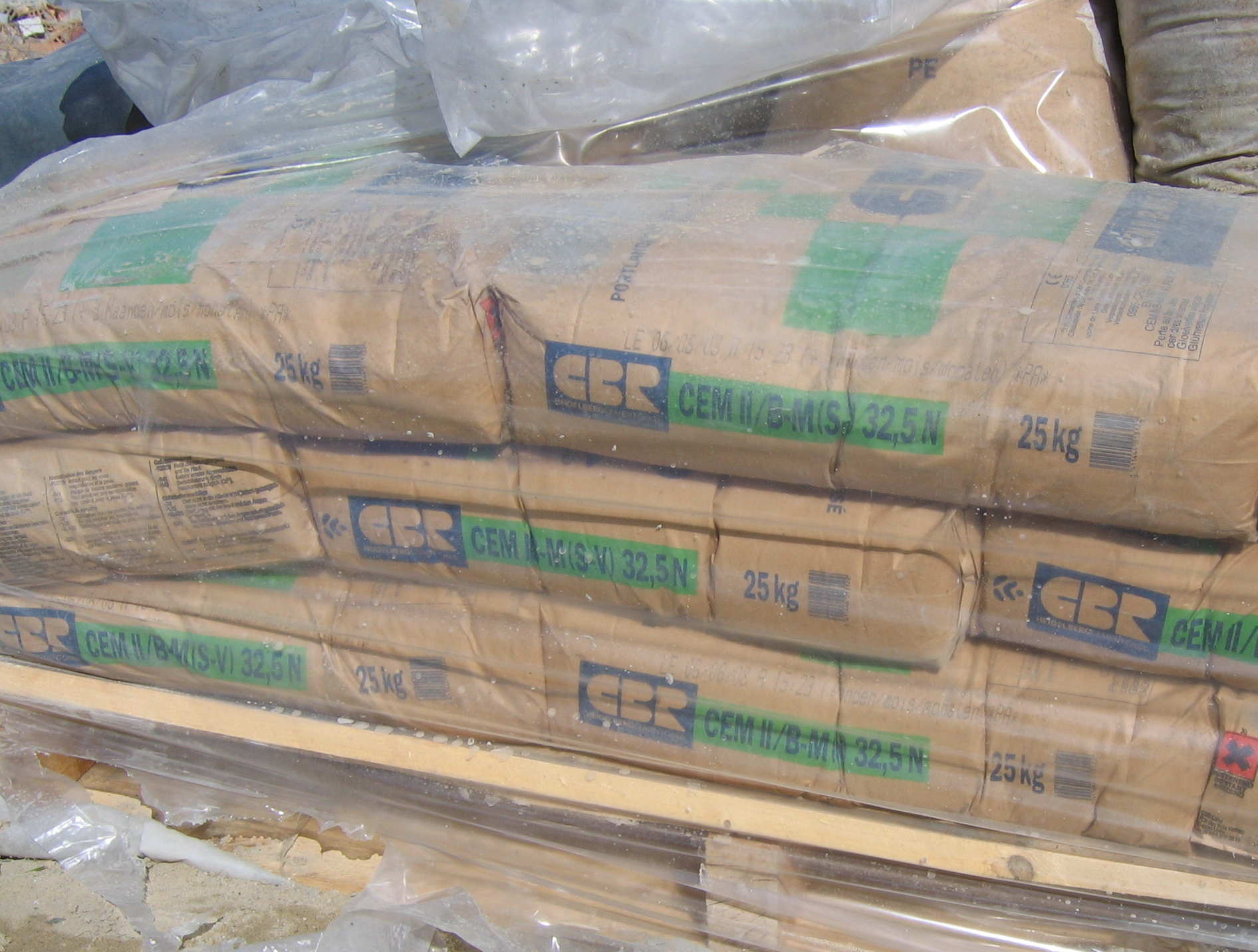
Cement follows a different adjustment pattern but with broad downstream effects. Higher cement prices flow into ready-mix concrete, mortar and precast components. Projects with high concrete intensity or continuous casting schedules can experience compounded pressure when cement and aggregates rise simultaneously.
Aggregates, sand and fill materials are often the hidden overrun source. Many projects secure framework pricing for steel and cement but under-plan aggregate supply alternatives. If local quarry output is constrained or permitting changes occur, transport distances expand, delivered costs rise sharply and early-stage works can be delayed.
Finishing and MEP packages may react with more lag, yet they influence handover phases where margins are already thin. Glass, aluminum, coatings, cables, sanitary products and imported equipment carry FX and lead-time risk. Without early specification freeze and phased purchase planning, projects may be forced to accept expensive procurement to protect completion milestones.
The biggest risk is not one dramatic spike in one item; it is prolonged moderate inflation across many items. This “slow erosion” pattern is harder to detect in single quotations but can materially compress profitability over several months without active category-level monitoring.
In B2B relationships, clients place high value on transparent price-governance methodology. A periodic material dashboard that states data source, movement range and projected budget impact builds trust far better than ad-hoc increase notices issued only when contract adjustment is requested.
Contract design is equally important. Escalation provisions should define reference indices, observation windows, trigger thresholds, documentation standards and adjustment frequency. Ambiguous wording often leads to disputes precisely when market pressure is highest. Clear mechanics protect both client and contractor and preserve project continuity.
Finally, governance cadence should be explicit. Weekly tactical reviews should address live quotations, critical-path materials and immediate site needs. Monthly strategic reviews should reassess scenario assumptions, margin trajectory and cash exposure. This two-speed rhythm balances rapid response with disciplined strategic oversight.
The first impact is budget drift between approved estimates and executable cost reality. Projects priced with outdated market assumptions can face immediate gaps once procurement starts. For firms managing multiple concurrent projects, one overrun can reduce pre-financing capacity for others and create portfolio-level cash pressure.
The second impact is margin compression. In competitive bidding environments, contractors often accept thin contingencies to secure awards. If material inflation outpaces assumptions, contingency buffers are exhausted early. Firms then either absorb lower margins or attempt late-stage cost cuts that may threaten execution quality.
Third, working-capital requirements increase. Higher material prices raise purchase-order values per cycle, often requiring larger credit lines or faster payment turnover with suppliers. Without a financing structure aligned to this reality, procurement can stall, leading to schedule slippage and additional indirect costs.
Fourth, receivables and subcontract risk increase. Main contractors face developer pressure while simultaneously renegotiating with subcontractors and vendors. If contract chains are not aligned on escalation logic, disputes often emerge around certification milestones. In volatile markets, contract governance must be treated as a strategic control function, not merely legal cleanup after conflict appears.
Seasonality also matters. Rain periods, regional extraction constraints and temporary logistics bottlenecks can create local aggregate spikes that do not necessarily represent long-term trend shifts. Firms that model seasonal behavior can optimize purchasing windows and inventory buffers, reducing peak-cost exposure.
Another practical measure is to pre-approve technically equivalent material options before peak procurement periods. During volatility, this allows rapid substitution without compromising compliance, quality or schedule. Prequalified alternatives reduce single-source dependency and strengthen negotiation leverage.
In procurement execution, category segmentation should be linked to contractual commitment dates, not only engineering milestones. A package that appears technically late in the schedule may still require early commercial locking if supplier lead times are unstable. Mapping material decision points against contractual obligations helps avoid expensive last-minute acceleration.
In conclusion, resilient delivery in a high-volatility market depends on institutional behavior: evidence-based planning, transparent contracts, disciplined procurement and field-level execution control. Firms that build these habits consistently are better positioned to protect client outcomes and sustain profitable growth through uncertain cycles.

In a high-price environment, design should no longer be a one-time handoff to execution. It must become a cost-control lever. Structural optimization, standardized detailing, modular repetition and lifecycle-based material selection can deliver stronger savings than late-stage supplier bargaining.
BIM-enabled workflows help detect coordination conflicts earlier and reduce late design changes, a common source of unplanned purchases at unfavorable pricing. Better quantity reliability enables staged procurement and improves negotiating position with strategic suppliers.
Schedule planning also needs to reflect market volatility. Instead of fixed procurement calendars, project teams should define purchasing windows by risk category and maintain rational safety stock for critical packages. The goal is to avoid both extremes: site disruption due to shortages and excessive inventory that strains cash and quality control.
Site productivity and waste control become direct financial metrics. A 1–2% increase in waste under elevated pricing can absorb a large share of project profit. Standardized issuance procedures, layered internal acceptance and crew-level productivity tracking are practical actions to protect margin quality.
At portfolio level, contractors should build project-level price-sensitivity matrices using material intensity, location, contract structure and schedule profile. This enables targeted management attention for high-risk projects instead of uniform control effort across the entire portfolio.
At management level, early-warning KPIs should be institutionalized: percentage of quotations expiring within seven days, weekly volatility range for top material categories, ratio of emergency purchases, and actual versus standard waste rates. These indicators identify control failure before it becomes schedule slippage or budget overrun.
Supplier strategy should move from transactional quoting to performance-based partnerships. Contractors can track supplier reliability through on-time delivery, batch consistency, response speed to specification changes and dispute resolution quality. Over time, this scorecard approach improves supply resilience and reduces hidden costs that are not visible in headline unit rates.
Base case: prices do not continue in a vertical spike but remain structurally high through year-end. Steel and cement may show short cycles linked to global signals, while aggregates and logistics stay tight in selected regions with strong infrastructure demand. This is the most practical planning baseline for most contractors.
Upside case: energy costs cool more clearly, logistics normalizes, local aggregate supply improves and project demand is distributed more evenly across quarters. Prices remain above old lows but become less volatile, allowing more effective price locking and procurement sequencing.
Risk case: energy rebounds, FX moves unfavorably, public-investment disbursement clusters in the same window, or local aggregate supply is disrupted. Under this case, regional price spikes may reappear in late-year periods, affecting both cost and schedule reliability.
Management implication: plan with price bands, not single-point forecasts. Each critical material category should have trigger thresholds for early purchase, re-estimation, contract renegotiation and schedule escalation. This framework supports faster response and reduces decision-making driven by sentiment.
A final caution: forecasting should not become rigid hope that prices will quickly revert to previous lows. In the current environment, competitive advantage belongs to companies that manage volatility consistently, not those that occasionally predict it correctly.
Capability-wise, prolonged volatility requires tighter cross-functional cadence. QS, engineering, procurement, finance and site teams should align on one source of truth. When teams share synchronized data definitions, decision latency falls and response quality improves.
Cash strategy should be integrated into procurement strategy. Firms need visibility on payment calendars, credit-line utilization and expected drawdown peaks tied to material milestones. Without this linkage, technically sound procurement plans can fail in execution due to liquidity constraints.
Quality assurance is frequently underweighted during inflationary periods. When teams focus only on price pressure, they may accept inconsistent material batches that later trigger rework, delay and warranty exposure. Strong incoming inspection protocols and traceability records are critical to prevent short-term procurement decisions from generating long-term cost liabilities.
Procurement governance should also define decision rights clearly. Site teams can trigger urgent requests, but commercial approval thresholds should remain aligned with budget control. A clear authority matrix reduces delay without sacrificing financial discipline.

For developers, priority one is to refresh cost baselines close to tender time rather than relying on long-lag historical benchmarks. Tender documents should include transparent escalation mechanisms for volatile materials to reduce disputes and attract capable bidders. Payment structures should also support timely procurement of critical packages.
For main contractors, procurement should be reorganized through a material-risk matrix: categories to lock early, categories to buy in cycles and categories with validated technical substitutes. Regional backup-supplier mapping is essential under current volatility. Weekly cross-functional price meetings (QS, procurement, engineering, finance, site teams) should drive synchronized decisions.
For specialist contractors, advantage comes from quantity precision, waste control and flexible vendor terms. Firms that can evidence disciplined cost control usually gain stronger positions in longer-term negotiations. This period is an opportunity to shift competition from lowest bid to highest delivery reliability.
Across all parties, shorter governance cycles are critical: weekly reporting for sensitive categories, monthly integrated review for project-level outlook. Reports should connect market data, schedule movement and cash-flow exposure. Seeing these relationships early reduces reactive rework and lowers total correction cost.
Strategically, sustained price volatility is a systems test. Firms that institutionalize disciplined response in difficult cycles typically gain stronger brand credibility and bidding advantage on complex projects where cost certainty and delivery reliability are decisive client criteria.
For developers and lenders, contractor transparency has become a selection criterion. Teams that can present auditable market assumptions, scenario-tested budgets and trigger-based response plans are perceived as lower delivery risk. This can improve bid credibility even when headline price is not the absolute lowest.
For infrastructure-adjacent projects, local permitting and extraction policy shifts can materially alter aggregate availability. Contractors should maintain regional intelligence channels and engage early with logistics partners to anticipate supply bottlenecks. A one-month delay in identifying local constraints can cascade into multi-month schedule compression costs.
Where possible, contractors should combine framework agreements with tactical spot purchases. Framework volumes secure baseline availability, while controlled spot purchases capture favorable short-term market windows. The mix ratio should be reviewed continuously as volatility evolves.
Given Gova’s corporate B2B positioning, market communication should move beyond price alerts toward demonstrated control capability. Enterprise clients value partners that can protect budget certainty, timeline credibility and quality consistency under volatile conditions.
Operationally, Gova can deploy a five-step framework: (1) weekly market refresh for critical materials, (2) contract-risk segmentation by package, (3) early-stage quantity optimization, (4) phased procurement with trigger-based decisions, and (5) integrated cost–schedule–cash dashboard governance. This converts data into site-level action.
Commercially, proposals and thought-leadership content should include practical case patterns: specification adjustments that lower lifecycle cost, balanced escalation clauses that protect both parties, and multi-source supply strategies that reduce disruption risk. Method clarity strengthens trust with developers and financing stakeholders.
Strategically, the current cycle is an opportunity for capability upgrade. Contractors that institutionalize volatility management in difficult periods typically scale faster when markets stabilize. For Gova, this is the pathway from execution contractor to trusted cost-and-delivery management partner.
Digitalization matters when it reduces decision latency. A lightweight but disciplined data stack—quotation logs, standardized category coding, change-order traceability and site-consumption reporting—can outperform large but poorly governed systems. The objective is operational clarity, not software complexity.
Commercial governance should include structured renegotiation playbooks. Rather than ad-hoc negotiation under stress, firms can predefine negotiation positions, evidence packs, fallback options and approval thresholds. This makes discussions with clients and suppliers faster, more consistent and less confrontational when price movement exceeds baseline assumptions.
Client-side governance can be strengthened by milestone-based value engineering checkpoints. Instead of one-off value engineering at concept stage, checkpoints at design freeze, procurement lock and pre-handover can capture additional savings and risk reduction.

Through the remainder of 2026, Vietnam’s construction materials market should be managed as a scenario-driven risk environment rather than a single price forecast. Companies planning on a quick return to previous low-price norms face substantial execution risk.
A resilient approach rests on four pillars: live price intelligence, flexible contracts with transparent adjustment logic, technical optimization to reduce material intensity, and phased procurement integrated with financing scenarios. When these pillars are aligned, firms can defend margin while maintaining delivery commitments.
For B2B clients, contractor selection should place greater weight on volatility-management capability rather than headline bid price alone. Firms with stronger systems often deliver lower total ownership cost across the full execution lifecycle.
In this environment, Gova positions itself as a transparent, data-driven and execution-focused partner. In markets where uncertainty is persistent, disciplined cost governance becomes the strongest foundation for long-term trust.
Portfolio-level governance should include stress testing. Firms can simulate 5%, 10% and 15% movement in key material baskets to quantify impact on gross margin, cash conversion cycle and completion risk. Scenario stress tests support earlier interventions such as resequencing, scope optimization or renegotiation.
Data governance also requires common definitions. Terms such as delivered cost, effective unit price, committed quantity and secured quantity should be standardized across teams. Without common taxonomy, dashboards can look complete while masking execution risk. Clarity in data language is a prerequisite for clarity in decision-making.
Insurance and bonding implications should not be ignored. Material volatility can affect claim frequency, subcontractor default risk and completion-cost exposure. Early coordination with insurers and surety partners improves resilience under stress scenarios.
Material-price governance only becomes useful when it changes decisions on real projects. A weekly price dashboard is not enough if site teams, QS teams and procurement teams continue to act on different information. The first field-level control is therefore a single material-risk register for each active project. This register should identify the material group, current approved quantity, procurement status, supplier quotation validity, storage constraint, design-decision dependency, and expected impact if the item is purchased two, four or eight weeks later. When this register is reviewed together with the construction schedule, the project team can see which price risks are merely commercial noise and which ones threaten critical path delivery.
The second control is quantity discipline. In volatile markets, inaccurate quantity take-offs are no longer a routine estimating problem; they become a cash-flow and margin problem. A small over-order of steel, cement or finishing material may lock capital into stock that cannot be deployed elsewhere. A small under-order may force emergency purchasing at a higher price or from a less reliable supplier. For industrial and commercial projects, quantity reconciliation should be performed at design freeze, after major shop drawing changes, and before each procurement package is released. This creates a practical bridge between design control and purchasing control.
The third control is early supplier involvement without losing commercial discipline. Suppliers often understand lead time, batch availability and regional logistics constraints earlier than the project team does. However, early supplier input must be documented and compared, not treated as an informal instruction. Gova can strengthen its B2B value proposition by helping clients separate market facts from sales pressure: which price movement is supported by published commodity data, which one is caused by local delivery constraints, and which one is only a short quotation window. This distinction improves negotiation quality and protects the client from reactive decisions.
The fourth control is design-to-budget coordination. When prices rise, some teams immediately search for cheaper alternatives. That is risky if the substitute material affects fire performance, durability, warranty, maintenance cost or authority acceptance. A better approach is to run structured option reviews: what can be optimized without changing performance, what requires consultant approval, what affects procurement timing, and what must be rejected because it would create acceptance or lifecycle risk. In other words, value engineering must remain engineering, not simply cost cutting.
Contract administration is another practical layer. Variation claims linked to material escalation should be supported by clear baseline assumptions, quotation evidence, delivery records and approval history. If records are weak, the discussion quickly becomes emotional: one side says the market moved, the other side says the price was already included. A disciplined document trail allows both parties to discuss adjustment based on evidence. This is particularly important in B2B projects where long-term relationships matter more than one isolated contract dispute.
Cash-flow planning also needs to become more granular. Material-heavy packages may require earlier deposits, shorter quotation validity, or staged delivery aligned with site readiness. If payment milestones are not synchronized with procurement realities, the contractor may carry excessive working-capital pressure while the client sees only a request for faster payment. Transparent cash-flow modeling helps both sides understand where acceleration genuinely reduces project risk and where it merely shifts financial burden.
In a stable market, clients often compare contractors mainly by technical compliance, project experience and headline price. In a volatile material market, that comparison is incomplete. A low bid can become expensive if the contractor has weak procurement discipline, poor document control, or no method for managing escalation transparently. Before awarding work, clients should ask how the contractor monitors material prices, how often procurement assumptions are updated, and how price risk is communicated during execution.
Clients should also ask for examples of value engineering that preserved performance rather than simply reducing specification quality. A credible contractor should be able to explain where design alternatives can reduce material intensity, where standardization can improve procurement efficiency, and where substitution would be unsafe or unacceptable. This is where a construction partner such as Gova can differentiate itself: not by promising that prices will not move, but by showing a method for controlling the consequences when they do.
Another useful question concerns supplier resilience. Does the contractor depend on a single source for critical materials? Are there approved alternatives? Are quotations tied to realistic delivery windows? Are storage and access conditions at the site sufficient for early delivery? These questions reveal whether the contractor treats procurement as an administrative function or as a core part of project delivery strategy.
Finally, clients should evaluate the contractor’s reporting discipline. The best reporting is not a thick monthly document full of general statements. It is a concise decision tool that identifies which material groups have moved, which procurement packages are exposed, what decision is required from the client, and what the cost or schedule consequence will be if no decision is made. In a volatile market, the speed and clarity of decision-making may matter as much as the initial contract rate.


