

contact@govacons.com.vn

0938 727 179



From 2026, Vietnam’s reduction of selected fire-safety administrative procedures may look like a straightforward schedule benefit for factory owners. Fewer waiting points, fewer formal checkpoints and less end-of-project paperwork sound attractive. But the more important reading is different: fire safety is not becoming less important. Responsibility is moving closer to the project team.
For an industrial project, that distinction matters. A factory can move faster only when its design, construction records, as-built drawings, equipment documents and operating practices already match. If the site changes faster than the documents, post-inspection will not feel lighter. It will expose the gaps more clearly.

The 2026 change is easy to misread if a project team only focuses on the phrase “procedure cut”. Resolution 66.18/2026/NQ-CP should be read together with the 2024 Law on Fire Prevention, Firefighting, Rescue and Salvage, Decree 105/2025/ND-CP and Circular 62/2026/TT-BCA. One document reduces administrative procedures; the others still frame the technical responsibilities for design, construction, internal acceptance, operation and post-inspection evidence.
Resolution 66.18/2026/NQ-CP, issued on 18 May 2026 and effective from 1 July 2026, identifies several changes under the management of the Ministry of Public Security. For factory projects, the practical points are: not carrying out the procedure for checking fire-safety acceptance work; not carrying out the fire-safety acceptance procedure for certain transition cases; not carrying out the procedure for restoration of operation; and simplifying the dossier for fire-safety design appraisal.
These changes are meaningful, but they do not remove the need to design and build correctly. The safer question is not only whether a procedure remains, but what evidence the owner must keep to prove that the factory being operated matches the approved design, as-built records and fire-safety assumptions.
| Changed item | Common misunderstanding | Safer interpretation for factory projects |
|---|---|---|
| No procedure for checking fire-safety acceptance work | No need for acceptance, testing or as-built records | Internal acceptance, testing and evidence control remain critical |
| No fire-safety acceptance procedure for certain transition cases | Any ongoing project can operate automatically | The project must confirm whether it falls into the transition scope |
| No restoration-of-operation procedure | A stopped facility can restart immediately | Safety conditions still need to be corrected and proven |
| Simplified design-appraisal dossier | Fire-safety drawings can be weaker | The design still has to show the required fire-safety solutions |
The 2024 law still requires fire-safety solutions when a project is prepared, adjusted, designed, renovated or repurposed. Core items such as fire separation distance, firefighting access, escape routes, fire resistance, compartmentation, smoke control, electrical systems and fire-safety equipment remain technical obligations, not optional paperwork.
A factory therefore cannot be “compliant” only at submission date. If storage density increases, a charging area is added, a warehouse changes function, a door is moved, or a sprinkler zone is affected, the design assumptions may no longer be valid. Without the old administrative checkpoint, the owner needs a stronger internal control system: staged acceptance, hidden-work records, equipment certificates, interlock tests, as-built drawings and operating handover.
In practice, post-inspection means evidence management. Drawings, site photos, material certificates, test reports, commissioning minutes and operation training records become the project’s proof. If these records are weak, the project may move faster at first but face heavier risk later.
A factory project changes many times between concept and operation. The business team adjusts production capacity. The warehouse team changes rack height. The operation team asks for another door or a shorter forklift route. The purchasing team substitutes equipment. Each decision may be reasonable commercially, but each can affect fire load, escape distance, sprinkler coverage, alarm zoning or firefighting access.
This is why Gova’s role should start before construction is almost finished. Legal, design, construction and operation logic need to be connected early. Every change should be screened with the same questions: does it change fire load, escape routes, protected zones, equipment selection, as-built drawings or operating conditions?
| Control area | Question to answer | Evidence to keep |
|---|---|---|
| Function and layout | Does final use match the design record? | Final layout, function sign-off, change log |
| Fire-safety design | Are escape, compartmentation, alarm and suppression solutions still valid? | Controlled drawing version, consultant review, appraisal record if applicable |
| Materials and equipment | Are installed devices consistent with specifications and certificates? | Certificates, catalogues, inspection records, site photos |
| Hidden works | Were pipes, cables and penetrations accepted before being covered? | Stage acceptance minutes, photos, site diary |
| Interlock tests | Were alarm, pump, valve, fan and signal scenarios tested? | Test checklist, results, defects and close-out records |
| As-built and operation | Can the operator explain the limits of safe use? | As-built drawings, handover file, training record, maintenance plan |
Under the old mindset, many project teams treated fire-safety approval and acceptance as final gates. Once the required document was obtained, the project was considered to have passed a major control point. When some procedures are simplified, that mindset becomes risky. The authority may no longer stand at every waiting point, but the technical and legal responsibilities remain.
The project must therefore control fire safety continuously: factory function, hazard profile, storage density, escape routes, fire compartmentation, alarm and suppression systems, water supply, pump room, power supply, substituted materials and final as-built drawings. Every seemingly small site change can trigger a technical consequence.
| Old habit | Better approach from 2026 |
| Wait for formal checkpoints near the end | Keep design, site work and records aligned throughout the project |
| Treat documents as a submission package | Treat documents as evidence of what is actually built and operated |
| Invite fire-safety review after the layout is nearly fixed | Integrate fire safety into layout, MEP and operation planning early |
| Focus on receiving a confirmation document | Manage responsibility among owner, designer, contractor and operator |
Consider a garment factory with an attached material warehouse. The first design assumes moderate storage density, normal rack height and a simple forklift route. During construction, the operation team asks to increase storage capacity, add higher racks, move a roller shutter door and create a temporary packing area near the loading zone.
From a business perspective, these requests make sense. They save space and improve internal logistics. From a fire-safety perspective, however, they may change fire load, sprinkler coverage, detector layout, escape distance, firefighting access and the assumptions behind the original design. If the site team handles these changes through isolated shop drawings, while the compliance records and as-built drawings are not updated, the project enters operation with a responsibility gap.
In a post-inspection environment, that gap is dangerous. The project may not be stopped immediately by a final administrative procedure, but when an inspection comes, the questions are direct: which drawing is final, who approved the change, was the fire-safety system recalculated for the new layout, and did the operation team receive the correct handover documents?
The procedure cut is not bad news. For well-managed projects, it can reduce unnecessary waiting time. The owner can avoid schedule gaps between completion and operation. The contractor can plan internal testing, commissioning, as-built records and handover more actively. The factory can begin operation with less administrative friction.
The condition is simple but demanding: the project must be right before it needs to prove that it is right. Architecture, structure, MEP, fire safety, environmental requirements and operating logic should be coordinated early. Fire safety should not be attached at the end as a separate paperwork layer.
In factory construction, schedule risk is not only the number of construction days. It is also the number of redesign loops created by late decisions. A late production-layout change can cost more time than a small construction item. A substituted fire-safety device can trigger checks on standards, certificates, drawings and internal acceptance records.
When procedures are simplified, the benefit is visible early. The responsibility often appears later, when the building is close to operation or already in use. This is why factory owners should treat post-inspection as a risk-management framework, not an administrative slogan.
Fire safety also continues after installation. Blocked escape routes, locked emergency doors, stored goods under sprinkler heads, changed forklift-charging areas or higher storage density can all break the assumptions of the original design. If the operation team receives documents but not the logic behind them, the system becomes a set of devices rather than an operating discipline.
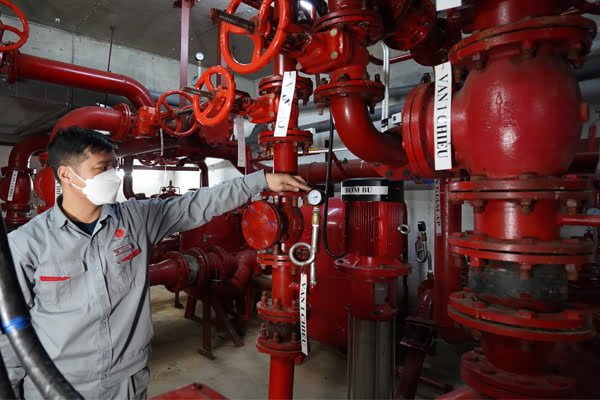
For factory projects, the value of an integrated legal, design and construction partner is not simply doing more tasks. The value is reducing the gaps between tasks. An architectural layout that ignores fire-safety logic creates pressure on MEP. A construction decision that ignores as-built records creates problems for compliance. An operating plan that is not reflected in design creates hidden changes after handover.
From 2026, Gova’s role should begin around three decisions: factory function, production/storage layout and compliance-record strategy. These decisions shape most later risks. When they are controlled early, design, construction, internal acceptance and handover become much smoother.
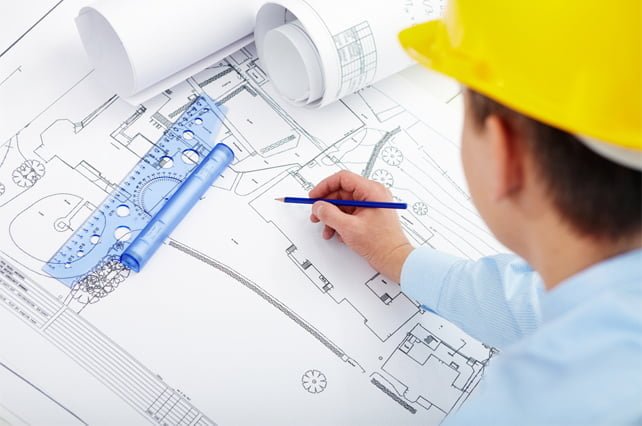
Before treating a factory as ready for operation, the owner should run a serious internal control round. The purpose is not only to collect documents, but to ensure that the project can prove its condition through drawings, minutes, certificates, photos, logs and actual site checks.
The 2026 fire-safety procedure cuts can help disciplined factory projects move faster. A project with coordinated design, controlled construction, clean records and trained operation should face less unnecessary waiting. But simplified procedures cannot rescue a poorly controlled project.
The useful question is not only “which procedure remains?” A better question is: if an inspection team enters the factory tomorrow, can the project prove that what is operating matches what was designed, built and handed over? If the answer is yes, procedure simplification creates real speed. If not, speed is only an early illusion.
This article is for general orientation. Each project should be reviewed according to submission date, location, function, scale, industry, fire-risk profile and the requirements of the competent authority.


