
contact@govacons.com.vn

0938 727 179



Industrial facility projects rarely lose control because no one can draw a building or schedule a meeting. Control is lost when each team works from a different reality: what foundations are complete, which equipment loads are final, what steel is being fabricated, where services still have physical clearance, and which document is authorised for site use. A modest relocation request can then become a chain of redesign, procurement delay, rework and dispute.
A strong main contractor does not demonstrate capability by agreeing quickly to every request and hoping the site team will absorb the consequences. Its more valuable role is to surface impacts early, separate technical analysis from business decisions, and organise the people who must act around one current instruction. The owner retains control of operating objectives. The contractor and consultants should make the options, limits, cost, programme and evidence visible enough for that choice to be deliberate.
This article follows practical controls from drawings to site: a buildable baseline, interdisciplinary interfaces, traceable changes, inspections before evidence is concealed, procurement connected to the programme, and handover data that remains useful. It is general guidance, not a substitute for approved design, contract conditions, specialist calculations or project-specific authority requirements.
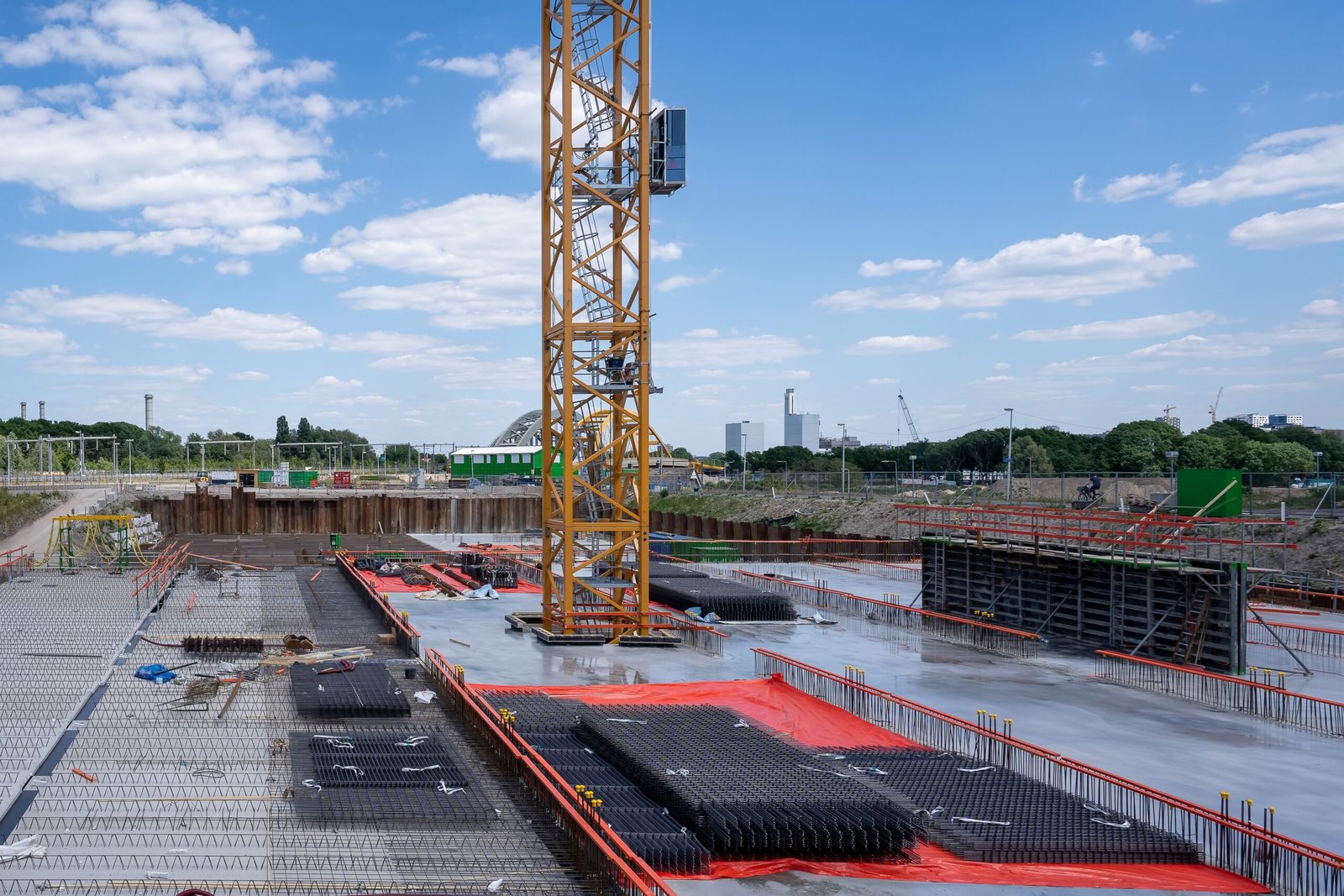

Before a major mobilisation, the main contractor should test three baselines against each other: the owner’s operating needs, the information issued for construction, and the conditions that actually exist on site. They seldom align perfectly at the beginning. Ground conditions may differ from an early assumption, crane access may be constrained, or a supplier’s fabrication lead time may exceed the master programme. A credible baseline says not only when a milestone is planned, but what must be true before it can occur.
A useful start-up review does not consist of reading drawings aloud. It looks for interfaces: are machine locations and loads fixed, have finished levels allowed for pits and drainage, can delivery and lifting use the required areas, and do temporary utilities support the work sequence? Each point needs an information owner, due date, required evidence and a statement of the work it will prevent if the answer arrives late.
A foundation drawing is not truly ready merely because it has an issue status. Where anchor forces, machine loads, service pits or movement-joint details remain open, that package contains an unresolved condition. A capable contractor can recommend holding only the affected area while genuinely independent work proceeds. This protects the sequence; it is not delay by excessive caution. It prevents completed concrete and labour from becoming demolition because an assumption was never brought to a decision.
Each milestone also needs observable completion criteria: a construction release, an accepted sample, a placed order, an available workfront, or a specified inspection and record. With those criteria, weekly reporting becomes less dependent on “nearly complete” language. Owners see decisions before they become urgent, while the contractor has a sound basis for resources, procurement release and accountability.
Industrial buildings contain many conditions that can be correct in isolation and unworkable together. The steel frame can follow its drawings yet leave no route for cable containment; a service route can work in plan but have no room for supports; a slab can meet level requirements while a process plinth needs a different depth. Coordination must ask spatial and sequential questions: what passes through this zone, who works first, who inspects before concealment, and what does one system make impossible for another?
Effective meetings are often shorter than crowded meetings. They use a prepared interface register, marked drawings, sections or model views at the contested zone, and minutes that record decisions instead of conversations. “Discussed” is not a closed status. An item requires an agreed option, an authorised decision-maker, the document to be revised, an effective date and a clear instruction for the field team.
Technical coordination must be distinguished from authority to make an operating or commercial choice. Engineers can identify a clash, yet only the owner or a delegated representative may choose to retain an equipment position, alter a process, accept a wait or commit additional cost. The contractor should bring that choice to the appropriate level with constraints and evidence. It should not disappear into a technical email chain that no one treats as formal direction.
Site logistics are an interface too. Delivery routes, laydown areas, crane positions, exclusion zones, escape paths and high-level access change as the frame develops. A delivery on the planned date is not productive if there is nowhere safe to receive it. Good coordination considers both the building being assembled and the movement of people, plant and material around it. Transparency means the right person can find the current answer and blocker, not that everyone receives every file.
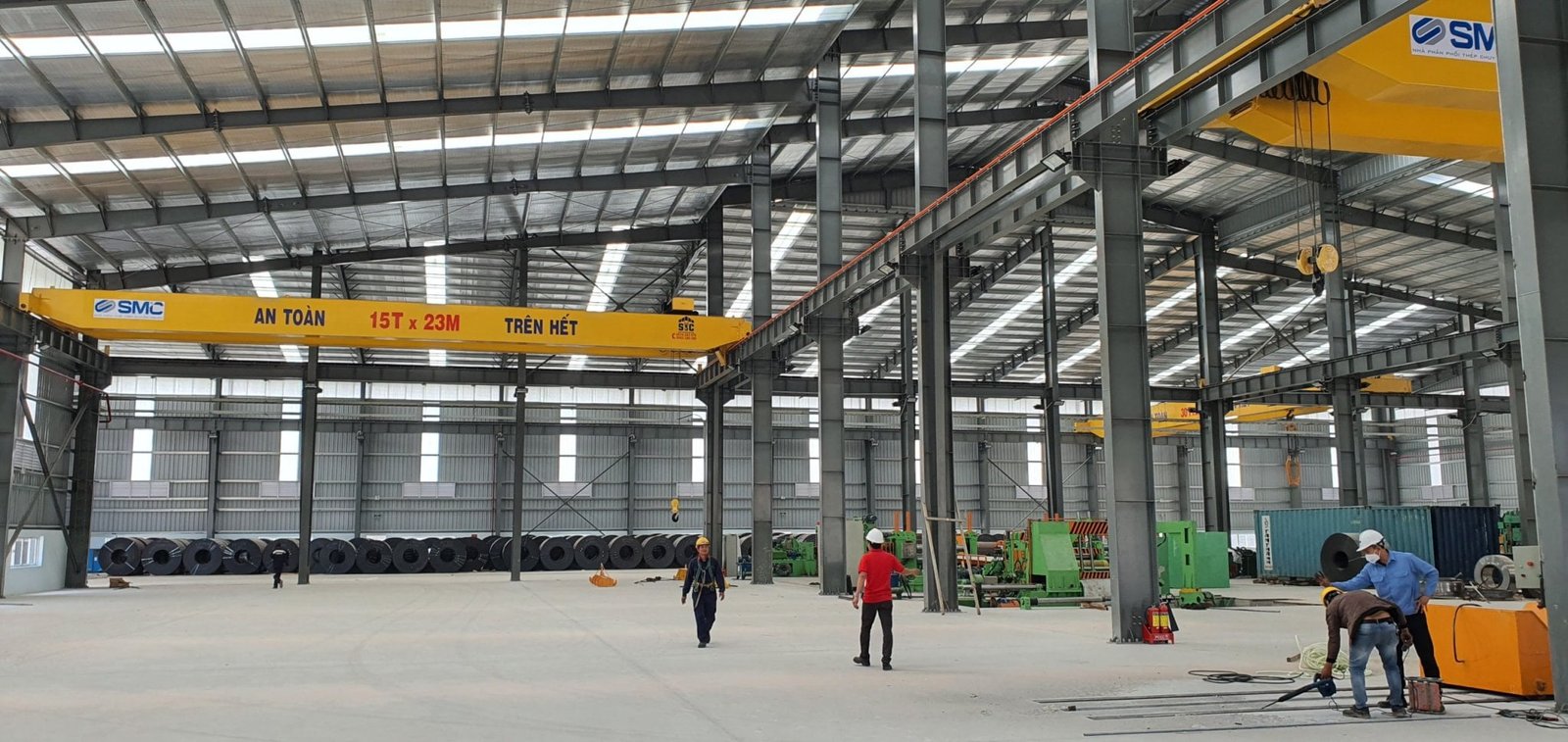
The following is a generic typical scenario, used to illustrate a control method and not attributed to a Gova project. An owner asks to relocate process equipment after foundation activities have started and structural steel has been released, fabricated or erected. The reason may be a revised material flow, maintenance clearance, a new supplier datum or an altered production line. The principal risk is treating the request as a simple coordinate change on a layout drawing.
The first step is not to drag the equipment symbol to another grid line. The team needs confirmed input data: static and dynamic loads, concentrated reactions, anchor forces, vibration, overall envelope, removal space, required levels, utilities, drainage, safety clearances and the route by which the item enters the facility. Any provisional value must be identified in the change record. A guess must not silently become a design condition because site activity is moving quickly.
At foundation and slab level, the review may include pads, footings, ground beams, local strengthening, installed reinforcement, poured concrete, joints, buried services, pits and flatness or level requirements. The new position can place load over different ground or conflict with a chamber or underground line. The designer must assess the confirmed information. The main contractor must identify what can safely continue and what needs a targeted hold before demolition becomes the way the question is discovered.
At steel and clearance level, a relocation can affect secondary members, platforms, bracing, maintenance openings, lifting routes or operating gaps. Sometimes the item itself clears the frame, but its installation route does not. Steel must be traced by state: not released, released, in fabrication, delivered or installed. That classification gives an honest picture of time and cost. A broad assurance that something “can be adjusted” does not.
At MEP level, a move calls for a renewed check of capacity and routes for power, cable containment, earthing, water, drainage, compressed air, ventilation, collection systems and project-specific utilities. Elevation is often the surprise. A route can reach the new location in plan while failing beneath a beam, above a technical ceiling or through a closed zone. The review needs plans, sections, a penetration list and access for both installation and maintenance.
Procurement is more than deciding whether an item can be bought again. Which supplier needs revised data, what has a long lead time, which order can be held or amended, what is already on a production line, and which site activities must change sequence? These states should sit with the critical path. When design, purchasing and site work are kept in separate lists, the problem frequently appears only after a crew has lost its productive workfront.
Executive reporting should use conditional language. A milestone can be retained if a revised drawing is approved by a stated date, a supplier confirms by another, and the installation area is released by a third. If not, the report describes recovery options, extra resources and remaining effect. Absolute assurances without conditions may sound decisive, but they do not give the authorised person a chance to act while action still protects the outcome.
Documentation closes the control loop. A change is not complete simply because field work has been altered. It requires the request, confirmed inputs, revised drawings, approvals, field instructions, required pre-concealment checks, site records and suitable as-built updates. That chain helps future operators understand why the finished condition differs from an early layout, and prevents an obsolete PDF from reappearing as live direction.
A control table does not replace the contractual change procedure, but it provides a common surface on which the team can view one request. Open the record when the request appears, add evidence as it arrives, and close it only when technical, commercial, site and data matters have known outcomes. Its value is not visual form. It forces the project to distinguish what is known from what is pending and to identify the next responsible action.
It is important not to treat “asked” as “confirmed”. If equipment loading is not final, the change cannot be reported as fully assessed. If steel has been cut but not erected, options differ from a member already installed at height. Naming the actual state shows the owner which decision protects a date, which releases a cost and which risk will grow if the response window expires.
The register should not become a blame list. Every line needs an action owner, due date, required record and assumptions that will expire. When an assumption is not confirmed on time, it returns to the open-risk list; it does not become silent permission to proceed. That modest discipline protects field crews from being asked to infer intent from incomplete information.
For an owner, asking for such a record is also a practical test of execution capability. Experience can be described in a presentation, but management capability is shown in the way a contractor decomposes an impact, identifies irreversible commitments, obtains confirmation and preserves evidence. This is most valuable when a change comes late, because the project has less room to recover from an avoidable mistake.
| Control layer | Decision question | Evidence to seek | Typical owner |
|---|---|---|---|
| Operating requirement | Which values are confirmed? | Supplier data, process layout, clarification record | Owner or delegated representative |
| Foundations and structure | Have loads, anchors, clearance or sequence changed? | Design assessment and revised drawings | Designer and authorised parties |
| MEP and space | Are routes, levels, capacity and connections feasible? | Plans, sections and coordinated drawing | Interdisciplinary technical leads |
| Procurement and programme | What is ordered, fabricated, delivered or installed? | Order status, critical path, sequencing options | Project management and authorised parties |
| Site and records | What may proceed, what must stop, what replaces old documents? | Field instruction, inspection and as-built update | Site management and document control |
Quality control in an industrial facility is not a final inspection event. Once concrete is poured, anchor assemblies are covered, services are closed above ceilings or finishes cover a surface, both correction and proof become harder. The contractor should build hold and witness points into the sequence, with acceptance criteria, responsible inspectors, records and a route for responding when a result does not meet the agreed condition.
For foundations and structure, checks should relate to practical risk: setting-out, levels, reinforcement, embedded items, anchors, concrete conditions, curing, member identity, connections, verticality and locations that will be hard to reach later. Not every item deserves the same intensity. The level of control should reflect the consequence of discovering a deviation too late, not the convenience of filling out the same form everywhere.
For MEP, a route that is correct in plan does not prove that the system can operate. Supports, maintenance access, gradients, discharge points, connections and clearances need area checks and whole-system checks. This exposes gaps between work packages. If review waits until several layers are complete, reopening the space almost always costs more than making time for a timely check.
Quality records should serve today’s construction team and tomorrow’s operating team. Photographs need location, date and purpose; records should connect to the relevant drawing revision; and any nonconformity should state the actual condition, impact assessment, disposition, corrective action and recheck evidence. “Corrected” has value only when a later reader can trace why it was accepted.
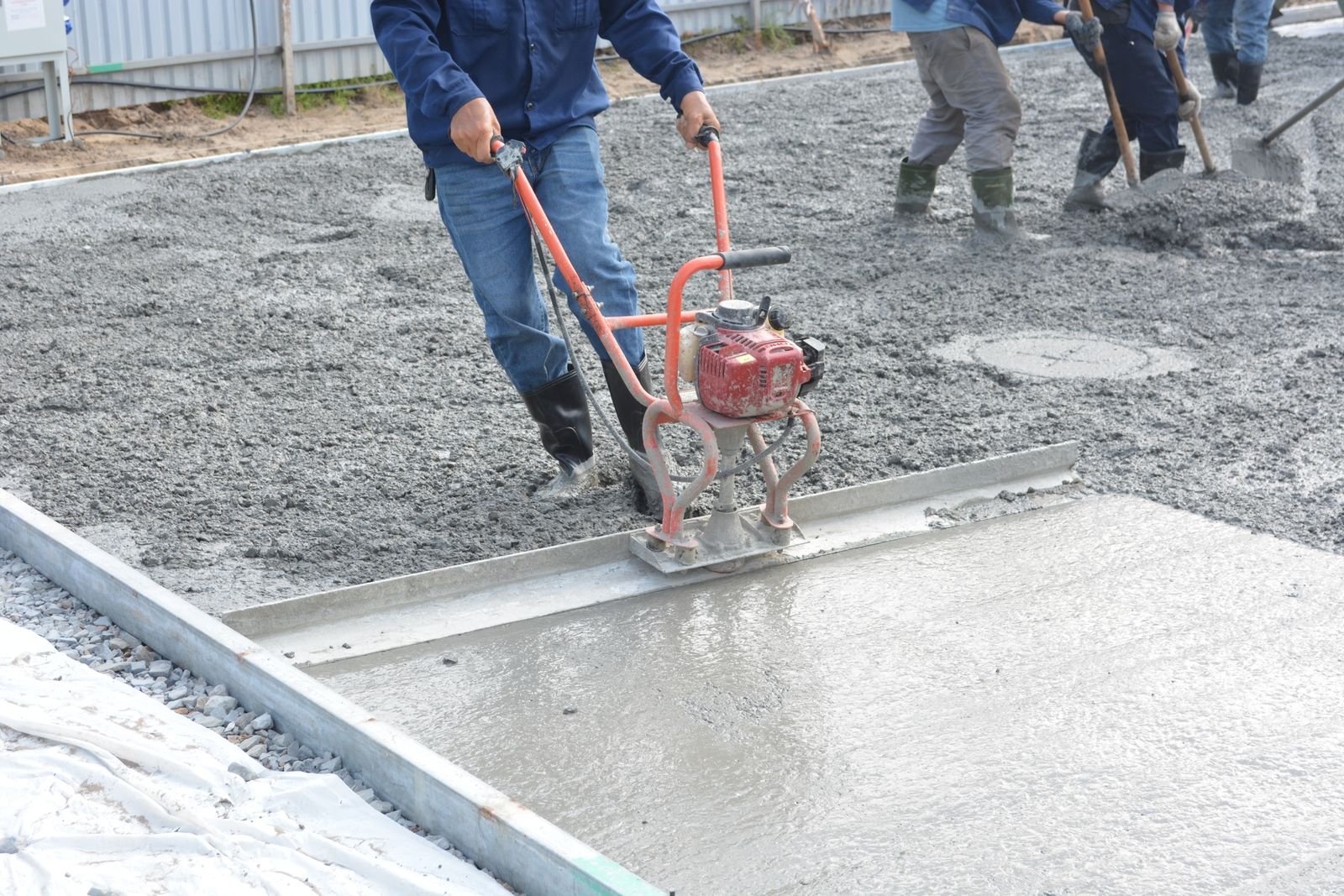
A dependable programme identifies genuinely critical work and the constraints that protect it. In an industrial facility these may include design approval, equipment data, steel fabrication, special materials, weather, crane access, skilled labour or access to a workfront. A percentage-complete figure does not show whether the project is losing the conditions needed to complete the remaining percentage.
Procurement should connect technical release to installation. Each package should show when information is fixed, drawings are released, orders are placed, production is confirmed, pre-delivery checks occur, material arrives, installation begins and checks are completed. Once a change appears, the team can see which commitment it touches and which decision window remains. A dated, evidenced status is more useful than saying a material is “on plan”.
Controlled acceleration differs from overlapping work while information is missing. Parallel activity can be reasonable where interfaces are fixed and risks are managed. Putting several trades into an unstable area more often creates rework, congestion, unsafe conditions and disputes about responsibility. The contractor should state where duration can be compressed through resources or methods, and where the sequence must be protected to avoid a larger delay.
Weekly coordination should concentrate on commitments due before the next meeting: the approval required, material confirmation needed, workfront to be released and inspection that cannot be missed. This does not require a longer report. It gives the site the conditions to advance. The focus moves from describing activity already completed to protecting the work that must happen next.
Site conditions change quickly, so document control cannot sit outside construction. An issue register needs to show which revision is active in each area, which instruction has been superseded and who received the new information. If a crew must choose between versions by judgement, the system has failed even when both files exist on a server. The correct revision needs to reach the workfront before work depends on it.
Safety belongs in daily coordination, particularly at lifting interfaces, work at height, temporary power, confined spaces, internal traffic and overlapping activity. No form substitutes for looking ahead at conflict between people, plant and space. The work plan needs a controlled zone, coordinator, sequence and stop conditions when the actual field condition differs from the assumption behind the method.
When an area reaches completion, its data should not wait for the last project month. Updated drawings, inspection outcomes, equipment guidance, material records and approved changes should be organised so the operating team can find them. This reduces the late rush for as-built packages and exposes missing evidence while the people who performed the work are still available to clarify or recheck it.
Handover is therefore not merely a day for transferring keys. It is a continuing confirmation that the facility corresponds to what was decided, inspected and recorded. Some items need operational follow-up, some need training, and some depend on equipment-specific requirements. Making those duties visible early prevents handover data from becoming a thick package that does not support operation.
No main contractor can honestly promise to remove every risk. Industrial projects will always contain updated equipment data, supply volatility, newly revealed ground conditions and altered operating needs. The difference lies in detection speed, quality of impact assessment, decision discipline and evidence retained. These controls are less visible than equipment and manpower, but they determine whether a site progresses under control or progresses only to return and repair.
They also make the relationship among owner, consultants, suppliers and contractor more practical. Owners do not need to become specialists in every connection. They need to see options, cost–programme–risk implications and the moment a decision is required. Contractors should not make operating choices for owners. They should organise the work so that an operating choice does not quietly damage commitments already made.
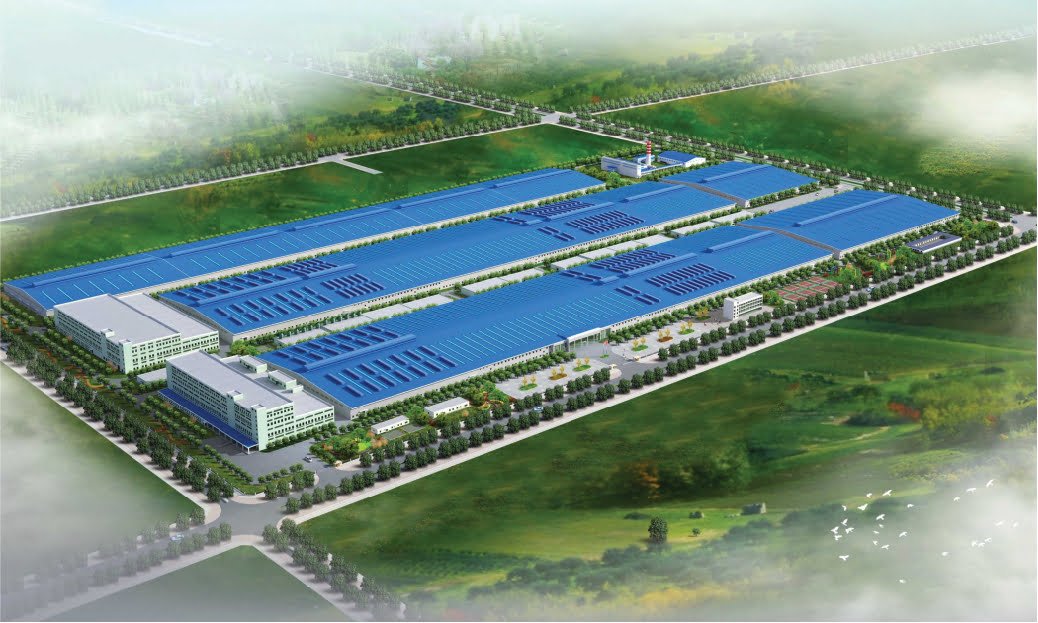
Public portfolio information includes the Sailun Vietnam phase 2 package 1 steel workshop in Phuoc Dong Industrial Park, Tay Ninh, listed for 2016 at VND 62 billion, and the SMC Phu My steel-processing factory in Phu My 2 Industrial Park, Ba Ria–Vung Tau, listed for 2021 at VND 162 billion. These are portfolio facts only; no additional scope or outcome is inferred here.
At every interface, the team should define a condition to start and a condition to hand over. An area is not ready for an installation crew merely because it is physically empty. It needs the correct drawing revision, access, laydown space, safe conditions, verified predecessor work and a clear responsibility boundary. This definition reduces invisible waiting days in which a crew is present but cannot work productively.
Executive measures should also look toward ability to finish rather than activity alone. Alongside volume percentages, a project can monitor overdue interfaces, response time for changes, procurement packages without fixed input data, control points awaiting confirmation, and the proportion of work ready in the next two to four weeks. These measures do not replace technical judgement, but they direct meetings toward the conditions for the next work.
A well-controlled change has a boundary. When equipment moves, the team should not reopen every settled decision merely because there is an opportunity to optimise something else. It should separate what requires reassessment through direct impact from what can remain intact. Controlled scope maintains momentum without pretending there is no effect. If another impact is identified, it becomes a separate change with its own reason and owner.
Field communication must be designed for the people who perform the work, not only those who attend the meeting. Instructions should be concise, location-specific, linked to the relevant drawing, and clear about inspections and prohibited next steps. Material changes should reach supervisors, foremen and interfacing teams before the shift begins. A correct meeting record that never reaches the person holding the tool is not control.
When delay is debated, the time record matters: when the request appeared, when input data arrived, what work had been committed, and when an instruction became effective. Disciplined recording is not primarily about winning a dispute. It helps the team see which decision can still be recovered, which effect has become irreversible, and how loss can be limited for the next package.
Control does not mean making a project heavy with forms. A capable project uses enough recordkeeping that important questions cannot disappear: who decided, on what information, when it took effect, and who needed to know. If the system is too elaborate, people work around it; if it is too loose, the field has to guess. The aim is a rhythm simple enough to follow and strong enough that a material change cannot slip through a gap.
Owners also benefit when decisions are presented at the right level of detail. A steering decision does not require every calculation sheet, but it does need a clear statement of the operating objective, viable alternatives, the consequence of waiting, and the commitments that cannot later be reversed. The technical file should remain available for review, while the decision paper remains readable enough that the responsible person can decide rather than simply acknowledge receipt.
Risk registers are useful only when they change work. A live risk should connect to an owner, a trigger, a planned response and a date for reassessment. For example, uncertain equipment data may trigger a targeted design hold, a supplier clarification and a programme review before fabrication release. Describing the risk without linking it to a field action produces a report, not a control. Conversely, closing a risk should require evidence that the trigger has been removed or the response has been implemented.
Commercial discipline matters for the same reason. The project team should separate the technical instruction needed to keep people safe or prevent rework from the evaluation of time and cost entitlement. Waiting for every commercial question to be settled before issuing a necessary technical direction can compound loss. Issuing work without a traceable record can create a different problem. A strong system allows the authorised instruction, relevant records and commercial assessment to proceed in linked but appropriate tracks.
Recovery planning should test feasibility rather than list aspirational actions. Extra labour, extended shifts, alternative fabrication, resequencing, partial handover or changed logistics each have prerequisites, safety implications and diminishing returns. The question is not whether a bar chart can be compressed; it is whether space, access, information, supervision, materials and quality controls can support the proposed overlap. Recovery that ignores these conditions can make the headline programme look better while weakening the project below it.
The same discipline helps at completion. A small number of unresolved records, access issues or operating questions can prevent a facility from being genuinely ready even when physical works look finished. Reviewing readiness by system and area, with responsible owners and evidence of completion, is more useful than waiting for one final global declaration. It gives the operating team a visible path into the facility and gives the contractor a structured way to close remaining obligations.
Small controls protect large commitments when information changes close to irreversible work.
When appointing an execution partner, owners should ask how interfaces, changes, quality hold points, long-lead materials, safety and handover data are controlled through practical methods and records. Assurances matter, but only a control system shows whether an assurance can survive the realities of site delivery. Gova Construction can be a point of contact to discuss an approach suited to project conditions through its official contact page.